matchshape
R2026bDescription
matches = matchshape(model,searchImage)
matches = matchshape(model,searchImage,Name=Value)MaxMatches=3 limits the results to the three highest-scoring shape
model instances.
Examples
Read and display the template image.
templateImage = imread("edgeMatchModel.png");
imageshow(templateImage)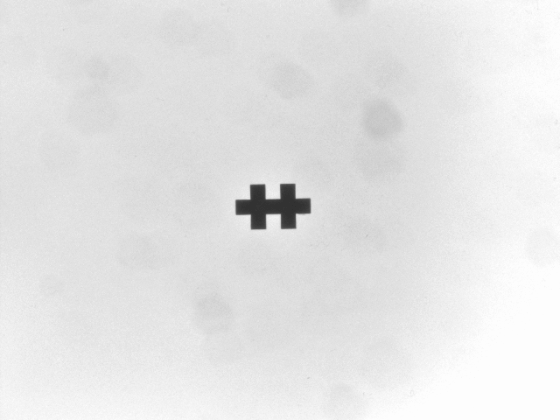
Create a shape model object, then visualize the shape model by using the show function.
model = shapemodel(templateImage);
show(model)
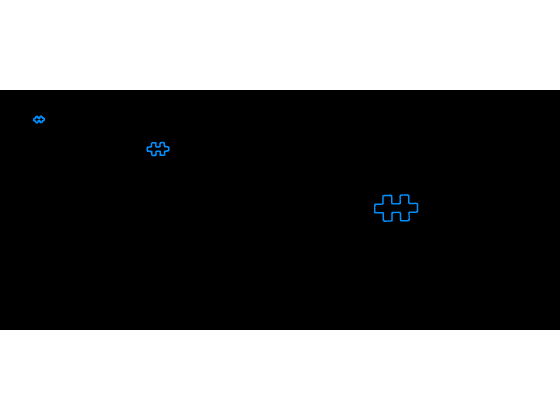
Read and display the search image,
searchImage = imread("edgeMatchSearch1.png");
imageshow(searchImage)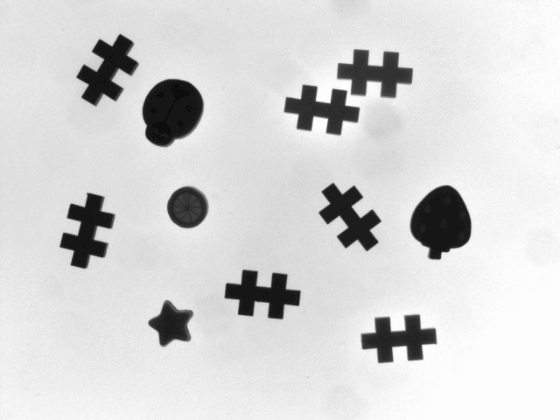
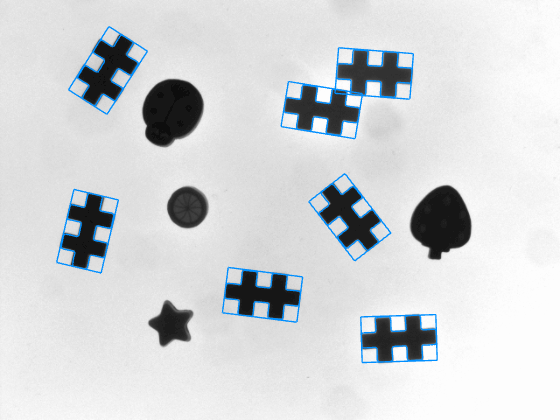
Find and locate shape model instances in the search image by using the matchshape function. Set MaxMatches to 10 to return up to ten instances.
matches = matchshape(model,searchImage,MaxMatches=10);
Visualize the shape model matches in the search image by using the showmatches function.
showmatches(model,matches,searchImage)
Read the template image.
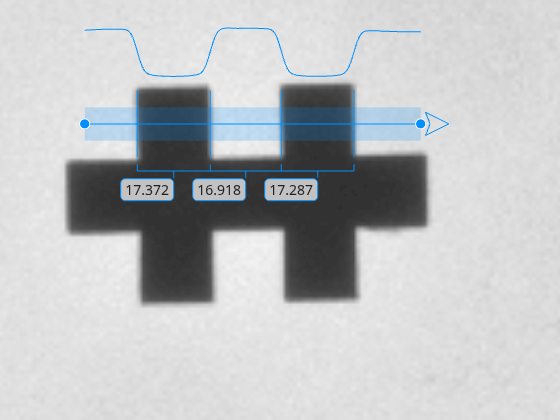
templateImage = imread("edgeMatchModel.png");Create an Image object by using the imageshow function. The image shows the template image with a caliper that is created in the next section.
hIm = imageshow(templateImage);
Define the position of the profile line of the caliper measurement tool so that the profile line contains the all the relevant edges, Then, detect and measure the distances between the edges in the reference image with the caliper tool by using the uicaliper object. Zoom into the template image to get a more detailed view.
caliperPositionInTemplateImage = [274 220; 354 220];
hCal = uicaliper(hIm,Position=caliperPositionInTemplateImage);
hIm.Parent.CameraZoom = 8;
The caliper detects 3 widths of detected edge pairs along the caliper profile.
templateMeasurement = hCal.IntraEdgeDistance
templateMeasurement = 1×3

   17.3718   16.9179   17.2868
Create a shape model by using the template image.
model = shapemodel(templateImage);
Store the caliper position relative to the shape model origin.
relativeCaliperPosition = caliperPositionInTemplateImage - model.ModelOrigin;
Load the search image.
searchImage = imread("edgeMatchSearch1.png");Find and locate shape model instances in the search image by using the matchshape function.
matches = matchshape(model,searchImage);
The match result includes a geometric transformation that maps template coordinates to the search image. Apply the match transformation to place the caliper in the search image by using the transformPointsForward function.
caliperPositionMatch = transformPointsForward(matches.ModelOriginTransformation,relativeCaliperPosition);
hImSearch = imageshow(searchImage);
hCalMatch = uicaliper(hImSearch,Position=caliperPositionMatch);
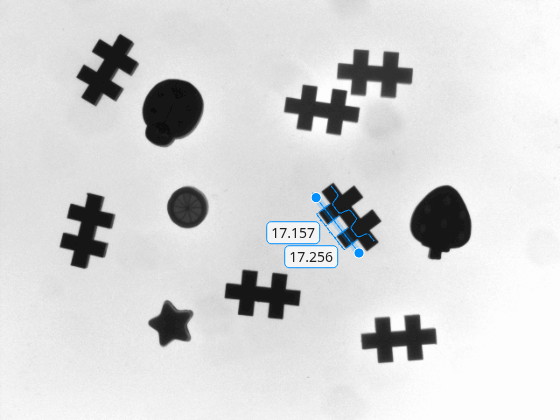
Compare the template and search image measurements to verify consistency.
searchMeasurement = hCalMatch.IntraEdgeDistance;
table(templateMeasurement(:),searchMeasurement(:),VariableNames=["Template","Search"])
ans = 3×2 table
    Template    Search
    ________    ______

     17.372     17.256
     16.918      17.07
     17.287     17.157
Input Arguments
Name-Value Arguments
Output Arguments
Version History
Introduced in R2026b

